
Dabur India reported a steady performance in Q1 FY27 with 10.6 per cent year-on-year revenue growth, a 12-quarter high, driven by broad-based gains across India and international businesses. However, volume growth, particularly in beverages due to unseasonal rains, and concerns over monsoon impact on rural demand remain key challenges.

Mumbai has spent four centuries building folklore around its monsoon: The potholes, the delayed trains, the office debates about whether it will 'break' this week or next. It turns out the rain was always a market. Nobody had built the exchange for it until now!

India's economy is projected to lose momentum in the second half of fiscal 2026-27, with tighter financial conditions, elevated energy prices, and broadening inflation pressures posing significant risks, according to DBS Bank economist Radhika Rao.
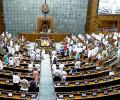
The Congress party is set to challenge the Modi government on a range of critical issues, including alleged theft of Ram temple donations, 'systemic corrosion' of the education system, and constitutional amendment bills related to delimitation and dismissal of ministers, during the upcoming Monsoon Session of Parliament.

Morgan Stanley analysts, led by Ridham Desai, predict that the next phase of the Indian market rally will be primarily driven by the April-June quarter (Q1FY27) corporate earnings season and the performance of the monsoon.

The Reserve Bank of India (RBI) has maintained its benchmark policy rate at 5.25 per cent for the fourth consecutive meeting, prioritising clarity on inflation trends, particularly concerning energy costs and geopolitical developments.

Senior Congress leader Shashi Tharoor has articulated India's position on BRICS, advocating for it to be a "non-West, but not anti-West" platform, a stance he believes is crucial for India's national interest. He highlighted the prestige of hosting the BRICS summit, India's responsibility to represent the Global South, and the significance of bilateral meetings, particularly with China and Russia. Tharoor also addressed the strained India-China relations, citing border issues and trade leverage, and discussed the challenges within BRICS, including difficulties in achieving consensus on global issues and trade imbalances, while also considering the need for diversified international relations amidst unpredictable US sanctions.

Indian stock market benchmark indices, Sensex and Nifty, saw significant gains in early trade, driven by a sharp decline in crude oil prices and easing geopolitical tensions, alongside renewed foreign fund inflows.

Congress leader Rahul Gandhi has accused the Modi government of quietly paving the way for imposing fees on UPI transactions, alleging it's a surrender to American pressure. The government's recent notification exempts charges only up to Rs 2,000, sparking concerns that higher value transactions and eventually all UPI payments could incur fees. Finance Minister Nirmala Sitharaman, however, clarified that Merchant Discount Rate (MDR) applies to merchants, not customers, and supports digital infrastructure.

'A favourable base, last year's policy measures, the carryover impact of a good monsoon and improving earnings should all help.'

The Indian stock market's trajectory this week will be significantly influenced by crude oil prices, global market trends, and the commencement of the corporate earnings season, with IT major TCS set to announce its June-quarter results on July 9.

'The ethanol blended with petrol programme should not be halted or reconsidered.' 'India is not experiencing a structural sugar shortage, and the ethanol blending roadmap does not compete with food security or drive domestic price increases.'

ITC reported a 16.2 per cent year-on-year drop in consolidated net profit to 4,394.13 crore in Q1 FY27, primarily due to a significant increase in taxes on its cigarette business. Consolidated net revenues also declined by 11.1 per cent to 19,114 crore, missing analyst estimates.

Indian stock markets this week will be primarily influenced by a series of corporate Q1 earnings, the evolving geopolitical situation in West Asia, and fluctuations in crude oil prices, according to market analysts.

'Healthy double-digit returns are still possible, though a sharp rally is unlikely.'

Indian benchmark stock indices, Sensex and Nifty, declined for a second consecutive day, primarily due to selling pressure in IT, oil & gas, and select banking shares. Concerns over the US-Iran negotiations and a sluggish monsoon further dampened market sentiment.

Analysts predict that the US-Iran geopolitical conflict, upcoming quarterly earnings announcements, and fluctuations in crude oil prices will be the primary drivers of investor sentiment in the Indian equity markets.

India's finance ministry anticipates inflation will remain relatively contained in the coming months, supported by a correction in crude oil prices and softening input costs following the cessation of the West Asia conflict, despite earlier spikes in wholesale and retail inflation.

Indian benchmark equity indices, Sensex and Nifty, saw early gains driven by strong buying in blue-chip bank stocks, fresh foreign fund inflows, and a decline in global crude oil prices, boosting investor confidence.

The Indian stock market's movement this week will be significantly influenced by the outcome of US-Iran talks, global crude oil prices, and the trading activities of foreign institutional investors (FIIs), according to market analysts.

'The market is currently neither cheap enough to be exciting about nor expensive enough to worry about.'

Commerce Minister Piyush Goyal announced that the legal scrubbing of the India-EU Free Trade Agreement (FTA) text is expected to be completed within 10-12 days, with the final deal anticipated to be signed by December 31.

Prime Minister Narendra Modi has affirmed strong action against NEET paper leak culprits and urged state governments to collaborate with the Centre to prevent future incidents, emphasising national interest over party politics. He highlighted the successful re-examination and arrests made.

'Buy on dips, buy on dips and sell on rise.'

'I don't see fear becoming a dominant factor for retail investors.'

The Congress escalated its campaign against alleged examination irregularities by marching to Prime Minister Narendra Modi's residence, transforming the issue into a direct challenge to his political authority and demanding the resignations of top government officials.

'Rather than deploying all their money at once, investors should invest gradually.' 'A staggered approach is the better strategy because volatility is likely to persist.'

Maruti Suzuki, India's leading passenger vehicle manufacturer, is experiencing robust growth in the June quarter, driven by a recovery in the entry-level segment, easing supply constraints, and significant market share gains. Despite potential headwinds from El Nio, analysts remain optimistic about the company's future performance.

Not a single retail outlet ran dry. Every household that wanted a cylinder got one. India faced neither a 1991 moment nor a 2013 one. Macroeconomic stability held. This was not an accident, and it was not luck alone. It was the work of a government that chose to act as it had during the pandemic -- deliberately and gradually, building one measure upon another rather than reaching for a single dramatic lever, explains V Anantha Nageswaran, chief economic advisor to the Government of India.

'The real shock is going to be from a deficient monsoon.'

'Why not aspire for 8 or 9 or even 10 per cent?'

Analysts predict that inflation data, the US Federal Reserve's interest rate decision, and crude oil price trends will be the primary factors influencing the movement of Indian stock markets. Geopolitical developments, particularly the US-Iran deal, and foreign investor activity will also play a crucial role.

Analysts predict that developments in West Asia, their impact on crude oil prices, and the trading activity of foreign institutional investors (FIIs) will be crucial factors influencing the Indian stock market this week.

The Reserve Bank of India (RBI) has kept its key lending rate, the repo rate, unchanged at 5.25 per cent for the second consecutive time, citing concerns over rising energy prices, supply disruptions from the West Asia crisis, and potential inflationary pressures.

IT stocks had their worst first half fall in decades, with the Nifty IT index declining 31% in the January-June 2026 period, its biggest decline in the first six months of a calendar year since 2003.

'We should expect extreme heat, extreme rains, floods, landslides and maybe cyclones. Not just this year, in the coming year as well.'

Chief Economic Advisor V Anantha Nageswaran stated that India's economy is projected to return to a 7 per cent-plus growth trajectory by 2027-28 (FY28), or sooner if external conditions improve, despite near-term challenges from the West Asia crisis.

The Indian government is set to accelerate reforms, including measures to enhance foreign direct investment, speed up divestment, and boost asset monetisation, to maintain economic growth despite rising fuel and fertiliser import costs driven by the West Asia crisis.

The BJP and the Opposition have engaged in a war of words over the implementation of the women's reservation bill, which aims to reserve seats for women in legislatures. The bill was defeated in the Lower House, leading to accusations and counter-accusations between the parties.

"Our strategy has always been to focus on volume-led penetration growth," said Manish Tiwary, chairman and managing director, Nestle India.
